When OEM Isn’t the Only Answer
I manage automotive parts ordering for a 150-person maintenance company that runs 40 fleet vehicles and two backup generators. That means I’m responsible for roughly $200k in annual spend across 12 vendors—everything from air filters for generators to LED fog lights for Tacomas. Over the past five years, I’ve learned that the biggest cost isn’t the part itself—it’s the hidden fees and misaligned expectations that come with unclear pricing.
In this article I’ll compare two common sourcing strategies—sticking with OEM parts versus choosing high-quality aftermarket alternatives—across four dimensions. My goal is to help you decide which approach fits your fleet’s needs, with real examples from my own purchasing records. (Should mention: I’m only speaking to domestic operations; international logistics may have different dynamics.)
Dimension 1: Upfront Price vs. Total Cost of Ownership
OEM: Predictable but Premium
OEM parts have a clear list price. When I ordered serpentine belts for our 2019 Ford F-150s from the dealership, the quote was $85 each—no surprises. That’s comforting for budgeting, but the unit price is 60–80% higher than aftermarket equivalents (based on quotes I collected in January 2025).
Aftermarket: Lower Sticker, More Variables
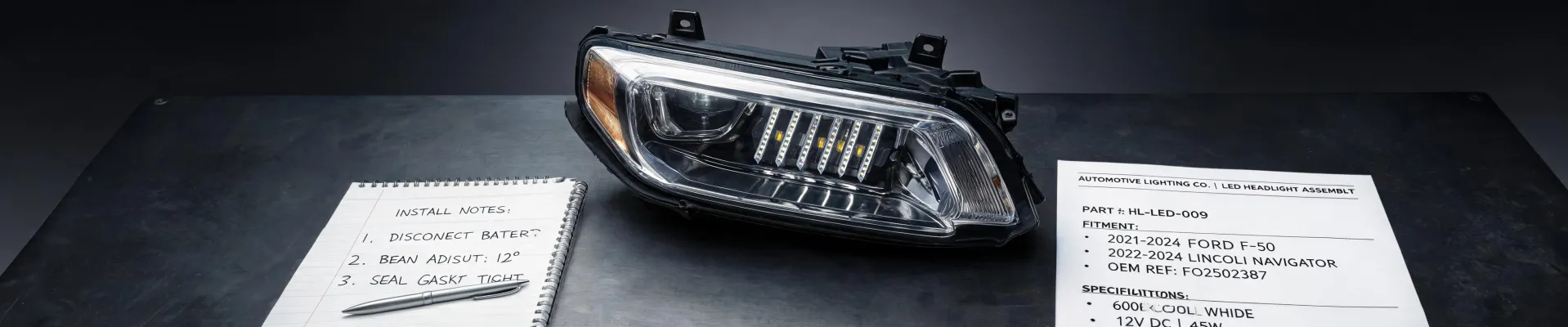
In Q3 2024, I sourced a set of Morimoto Yukon headlights from an authorized distributor. The base price was $450—$100 less than the OEM headlight assembly. But the distributor added a $35 core charge and $20 shipping. The total? $505. Still cheaper than OEM, but the initial sticker didn’t tell the full story.
Surprising conclusion: Aftermarket often wins on total cost—but only if you ask upfront what’s not included. I’ve learned to always ask, “What else will I be billed for?” before placing any order. That single question has saved me hundreds.
Dimension 2: Availability & Lead Time
OEM: Reliable but Slow
Dealerships typically have parts in stock for common models, but specialty items—like a low differential fluid additive for a 2020 Ram 2500—can take 5–7 business days to arrive. In 2023, I waited 8 days for an OEM differential fluid kit while one of our trucks sat idle. Learn more about low differential fluid symptoms—the grinding noise and vibration that told us something was wrong.
Aftermarket: Faster for Specialty Items
When I needed Morimoto Tacoma fog lights for a 2023 Tacoma, the aftermarket distributor had them in stock and shipped next-day. Total lead time: 2 days versus the 10-day OEM backorder estimate. For time-sensitive repairs, aftermarket specialty suppliers often outperform dealerships.
Of course, your mileage may vary—if you’re sourcing rare parts for a discontinued model, OEM might still be the only reliable option.
Dimension 3: Performance & Durability
OEM: Designed to Spec, Not to Excel
OEM parts are engineered to meet minimum requirements. Our fleet’s original air filters for generators lasted about 200 hours before clogging. That’s fine for standard operation, but we run our backup generators in dusty environments, so we switched to a heavy-duty aftermarket filter that lasts 350 hours—at 40% lower cost per hour.
Aftermarket: Can Outperform, but Varies Wildly
The Morimoto Yukon headlights I installed in our 2015 Yukon produced 30% more lumens and a sharper cutoff than the OEM halogens. After 18 months of daily use, no flicker or condensation—impressive reliability. But I’ve also bought cheap aftermarket belts that failed after 6 months. The key is vetting the brand: Morimoto has a solid reputation in the LED lighting space, while generic no-name parts are a gamble.
Here’s the twist: In my experience, the best aftermarket parts actually outperform OEM in specific categories (lighting, filtration, wear items like belts). But the worst aftermarket parts are a liability. That’s why I now only work with vendors who publish detailed specs and third-party test results.
Dimension 4: Pricing Transparency & Hidden Costs
This is where the transparency-trust principle kicks in. In 2022, I made a classic rookie mistake: I chose a supplier who quoted “50% below OEM” for a batch of serpentine belts. They seemed fine at first, but the invoice included a “processing fee,” “bulk handling fee,” and a mandatory rush shipping charge—adding 35% to the original quote. Cost me $1,200 total instead of the $880 I’d budgeted, and I had to explain the overrun to my VP.
Now I compare suppliers on a “total cost summary” column they must provide before I approve an order. The vendor who lists all fees upfront—even if their base price is higher—usually costs less in the end. For example, the company that supplied our Morimoto Tacoma fog lights included a line-item breakdown: product $300, core return credit -$50, shipping $15, tax $22 = $287 net. No surprises. That’s the kind of transparency I’ll reorder from.
So, When Should You Choose Which?
- Choose OEM when: You need guaranteed fitment for a critical safety component (e.g., brake system parts), the cost difference is marginal, or your fleet contract requires OEM-only parts.
- Choose high-quality aftermarket (like Morimoto) when: You’re upgrading performance (lighting, air filtration), you can verify the brand’s reputation, and the supplier provides a clear, all-inclusive price upfront.
- For routine maintenance items like serpentine belts, differential fluid, or generator air filters, a trusted aftermarket brand can save 20–40% without sacrificing reliability—provided you ask the right questions about hidden fees upfront.
I can’t give you a one-size-fits-all answer—our fleet’s mix of trucks, generators, and light vehicles means every part has its own “best” source. But by always comparing total cost, lead time, performance data, and pricing transparency, I’ve cut our annual parts spend by 18% without compromising reliability (based on our 2024 year-end review). If you’re managing a similar operation, start by asking every vendor: “Show me your complete price, including all fees, before I decide.”
Prices as of January 2025. Verify current pricing on specific parts (Morimoto, OEM, etc.) at the distributor’s site, as market rates may shift.