-
The 2016 order that should have taught me
-
September 2022: the lighting prototype disaster
-
What I look for now: the Morimoto example
-
The K20 oil pump kit that showed me the same pattern
-
Exhaust pipes, HVAC, and the “nearby” problem
-
But isn’t there a place for multi-process manufacturers?
-
My four-question checklist
-
Bottom line
I’m convinced that “we can handle that too” is one of the most dangerous sentences in automotive parts sourcing. It sounds like capability. Most of the time, it’s just capacity pretending to be competence.
I’ve spent the last nine years working with OEM and Tier 1 purchasing teams, starting on a production floor covered in stamping dies and CNC chips. I’ve made maybe 14 significant mistakes. Maybe 12, I’d have to check the war-room board. Total wasted budget: roughly $87,000. This is the story of three of those mistakes.
The 2016 order that should have taught me
In my first year, 2016, I compared three quotes for a structural bracket. One came from a progressive-die specialist. Another came from a large general stamper. The third came from a shop that claimed they could stamp, weld, coat, assemble, and also prototype LED housings. They were 12% cheaper and promised the fastest turnaround. It seemed like a no-brainer.
The sample looked acceptable. Then the full order landed. All 2,700 pieces had the same edge burr—the one I’d missed because I was staring at overall dimensions, not edge condition. Rework cost $890 and a week of schedule. The supplier billed me for the extra handling. Their answer: “We did what you approved.” They were right.
I only believed in the “ask for existing proof before you order” rule after ignoring it and paying that invoice.
September 2022: the lighting prototype disaster
Fast forward to September 2022. A customer asked for a custom LED housing. I didn’t want to qualify another supplier, so I gave the job to a metal fabricator who said they had an electronics partner. “No problem,” they said.
The problem appeared during thermal testing. The housing had hotspots, uneven projection, and a driver board that fried during voltage spikes. The customer had already approved the exterior design, so we had to explain why the inside didn’t match the outside. We lost the order: $3,200, plus credibility. The fabricator wasn’t a liar. They just didn’t have the optics experience to know what they didn’t know.
Everything I’d read about multi-process sourcing said it would reduce handoffs and risk. In practice, I found the opposite: risk moved straight into the handoff between metal structure and optical performance. The bracket was fine. The light wasn’t.
What I look for now: the Morimoto example
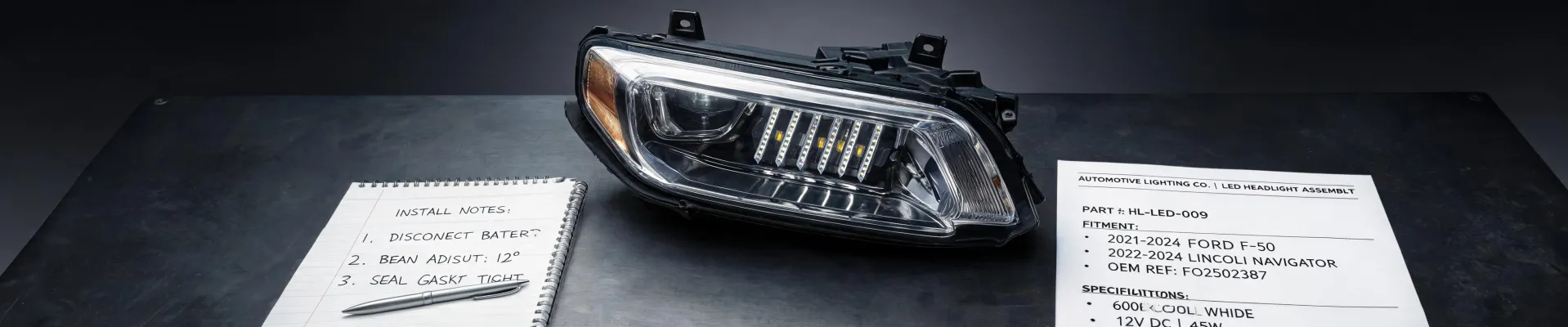
If someone searches for Morimoto Jeep Grand Cherokee headlights, they aren’t looking for a “kind of close” bracket. They’re looking for a headlight that fits, aims, and doesn’t start blinking after 90 days. Morimoto XB LED headlights have to meet real-world conditions and U.S. Department of Transportation requirements under FMVSS 108. That means photometric testing, thermal cycling, moisture ingress checks, and a housing that won’t turn into a fog machine.
I’ve reviewed maybe 300 lighting projects over the years. Maybe 260; I’d have to check the CRM. In every one that failed, the root cause wasn’t a bad person. It was a supplier saying yes to something outside their field. A specialist who hands you a list of what they don’t do seems rare. That’s why I call it the Morimoto example: when a company is known for one thing, it doesn’t need to be known for everything.
The K20 oil pump kit that showed me the same pattern
The same pattern follows me outside work. I once bought a K20 oil pump kit for a track day build. A generalist online outfit was 15% cheaper than the dedicated oiling specialist. The numbers said go cheap. My gut said stick with the specialist because they build those kits for racing teams. I ignored my gut. The kit arrived late, and the pressure-relief spec didn’t match the build sheet. It wasn’t catastrophic, but it was another data point.
Put another way: first cost is easy to see. Total cost is a lot harder.
Exhaust pipes, HVAC, and the “nearby” problem
Not every automotive question is about manufacturing. Sometimes a customer just wants to find an exhaust pipe nearby and get their truck back the same day. I don’t weld exhaust systems. I never pretend I do. I’ve given two referrals to a local shop that does custom pipes, and both people came back to me for unrelated lighting work. Referral value beats pretending to be a one-stop shop.
The same logic explains the heat pump vs oil furnace debate. Both heat a house, but they are not interchangeable. The right answer depends on climate, ductwork, insulation, fuel prices, and how long you’ll live there. A good contractor asks those questions. A bad contractor says “both work, pick one.” In automotive parts, replace “contractor” with “supplier” and you get the same story.
But isn’t there a place for multi-process manufacturers?
Yes. I already work with some. The best suppliers I know started with one core process, like stamping or forging, and built adjacent capabilities around it. They didn’t start with “everything” and somehow become excellent at all of it. They earned their extra processes one customer and one audit at a time.
For the record, I do not mean that multi-process manufacturers are bad. I mean that their capabilities need to be proven, not assumed. If a supplier is certified to IATF 16949 and can show PPAP documentation for the exact part you’re buying, that’s a different conversation. PPAP is proof, not marketing. But if the same shop claims they can make a headlight, an oil pump, and a custom exhaust all at once—ask for the data. Then ask what they don’t do.
I’ve also seen in-house die manufacturing save a program. The die is the product, and the tooling knowledge matters. That expertise simply doesn’t transfer to optical engineering.
My four-question checklist
After the third rejection in Q1 2024, I stopped being polite and put this checklist above my desk:
- What have you shipped in this exact product category in the last 12 months? If the answer is a long pause, walk.
- Can you show me the test data? A brochure quote doesn’t count. A certified lab report does.
- What don’t you do? “Nothing” is a red flag.
- Who would you refer me to if you couldn’t take my order? This one has caught more honest suppliers than any other question.
We’ve caught 47 potential order errors with this checklist in the past 18 months. That’s not a vanity number. It’s what happens when suppliers finally tell you the truth before you sign.
Bottom line
The supplier who says “this isn’t our strength—here’s who does it better” earned my trust for everything else.
I’d rather work with a specialist who knows their limits than a generalist who overpromises. That’s not a humble stance. It’s a self-preserving one.
Morimoto doesn’t build K20 oil pump kits. We don’t weld custom exhausts, and we don’t install HVAC systems. But if you need Morimoto Jeep Grand Cherokee headlights or Morimoto XB LED headlights, that’s exactly where we spend our time. We’re not a one-stop shop. We’re a focused one—and that’s the whole point.