It started with a milky oil cap on a Tuesday. The 2019 Ford F-150 had been running errands for our metal stamping plant all morning—delivering a die insert to the heat treater, picking up fasteners, hauling a broken pallet to the dump. By noon, it was overheating. I had it towed to an independent shop.
The mechanic called me with two words I didn't want to hear: bad head gasket.
I'm the guy who signs the maintenance purchase orders at a 120-person automotive parts company. My job isn't fixing trucks. It's making sure the money we spend on them doesn't wreck the monthly P&L. I've tracked every invoice for our seven-vehicle fleet for six years, and the most expensive line item is never the first repair. It's the second one.
The Bad Head Gasket and the Truck We Almost Sold
The truck had 112,000 miles on it. It was a work truck, with a dented tailgate, a cracked dashboard, and the kind of smell that makes you wonder what leaked under the back seat. But it was solid. Until it wasn't.
The mechanic said the head gasket was leaking combustion gas into the coolant. A head gasket is the thin seal between the engine block and the cylinder head. When it fails, coolant and oil mix, combustion gas escapes, and the engine overheats. On a 3.5-liter V6, that means opening up the top half of the engine. It's not a $200 sensor.
He gave me the numbers: $2,900 for the repair, including a new water pump. Then he added, almost as an afterthought, "Also, the rear wheel bearing is getting loud. You might want to replace it before it goes."
I typed how dangerous is a bad wheel bearing into my phone while standing in his bay. The answer: very. A wheel bearing sits inside the hub assembly and lets the wheel spin with minimal friction. When it wears out, the wheel wobbles, the hub heats up, and the bearing can collapse. At highway speed, that can lock the wheel, snap the spindle, or send the vehicle into another lane. That's not a repair bill. That's a safety incident.
"How dangerous is a bad wheel bearing?" turned out to be the wrong question. The right one was "How much will it cost if we ignore it?"
The Cheapest Quote Wasn't the Cheapest Quote
I do procurement for a living, so I got three quotes. The shop that diagnosed the truck came in at $2,900 for the head gasket and $380 for the wheel bearing. The second quote looked better: $2,400 plus $320. I almost went with it.
Then I read the fine print. The lower quote didn't include resurfacing the cylinder head. It planned to reuse the head bolts. It charged extra for the coolant flush and the alignment. It didn't offer a warranty on the gasket work.
When I built the full cost comparison, the "cheap" quote came to $3,150. The first shop's $2,900 included everything and a twelve-month parts-and-labor guarantee. That's an 8% difference hidden in line items.
A quote is a snapshot, not a promise. Per FTC guidelines (ftc.gov), advertising claims have to be truthful and substantiated. I'm not a lawyer, but I've learned to ask what "lifetime" means in writing before I approve a work order.
The Piston Skull Tattoo Moment
I was about to approve the repair when one of our welders—the guy with a piston skull tattoo on his forearm—walked past my office. He'd heard the story through the shop rumor mill.
"You know that truck was blowing coolant for a month, right?"
I didn't.
"The coolant tank was low every time I used it. It smelled sweet. I thought it was normal."
That stopped me. The warning signs weren't hidden. They were just ignored.
The wheel bearing was the same. The truck had a low hum on the highway for weeks. Nobody said anything because nobody was listening.
At least, that's been my experience with work vehicles. If you wait for a dashboard light, you're already paying the late fee.
That conversation changed how I think about maintenance. I didn't fully understand the value of preventive checks until a $2,900 repair became a $4,070 week—including the rental car, the expedited freight for a missed delivery, and the cost of a tow. Was I glad I caught it before the bearing failed? Yes. But I'd rather have caught it before the head gasket failed.
Morimoto Headlights and the Cost of Seeing Clearly
Once the truck was fixed, we had a decision: sell it or keep it for two more years. The numbers said keep it. The ops manager said, "If we keep it, I want better headlights. The factory units are dangerously dim."
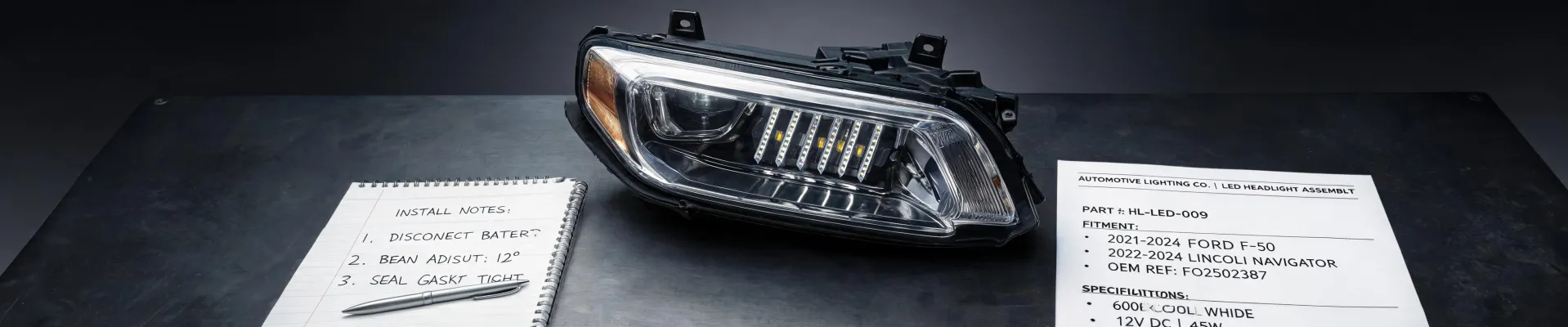
He sent me a link to 2019 Ford F150 Morimoto headlights. The price was higher than a standard replacement housing. I did the TCO math anyway. That's total cost of ownership, not the ticket price.
The Morimoto kit is plug-and-play on this truck—no hacked wiring, no extra brackets, and the LED beam pattern is actually aimed like a headlight instead of a flashlight. The install time was shorter than the generic replacement with the adapter harness we'd have needed. That saved labor.
Then the same guy asked about the Toyota Tundra we use for site deliveries. He found a Morimoto headlights Tundra kit with a similar design. The driver had been complaining about the factory projectors on the unlit access road behind the plant. We installed both.
Can I say the lighting upgrade saved us money? Not directly. But it reduced the risk of a nighttime backing incident in a crowded lot. To me, that's a preventive expense—like new wiper blades or a brake light bulb. The cost is small compared with a fender repair, an injury report, or an insurance claim.
The Checklist That Now Runs Our Fleet
We now do a 12-point check every quarter on all seven vehicles. Cost: about $90 per truck, or $630 a year for the whole fleet. The head gasket repair alone was $2,900. The math isn't even close.
The checklist covers coolant level, oil cap, visible leaks, wheel bearing play, tire wear, brake pads, lights, horn, wipers, fluid levels, belt condition, and a quick scan for dash lights. None of those checks require a certified engineer. They require a person with eyes and a flashlight.
If you ask me, a checklist is the cheapest insurance a small operation can buy. Five minutes of verification beats five days of correction.
Three things I'd tell any purchasing person:
- Measure TCO, not the ticket price. A quote is an opening offer, not a final cost.
- Ask what the "cheap" quote isn't saying. Head bolts, surface work, coolant, alignment: that's where the margin hides.
- Treat every small warning—a low coolant level, a humming bearing, a dim headlight—as an unpaid invoice.
The same logic applies to what we quote for customers. The supplier that wins is the one that catches a hidden tolerance problem before it becomes a scrap pile. Prevention isn't a maintenance idea. It's a manufacturing idea.
A bad head gasket is expensive. A bad wheel bearing is dangerous. Both are cheaper to catch early.
And if the guy with the piston skull tattoo tells you to check something, check it. He wasn't wrong once.